
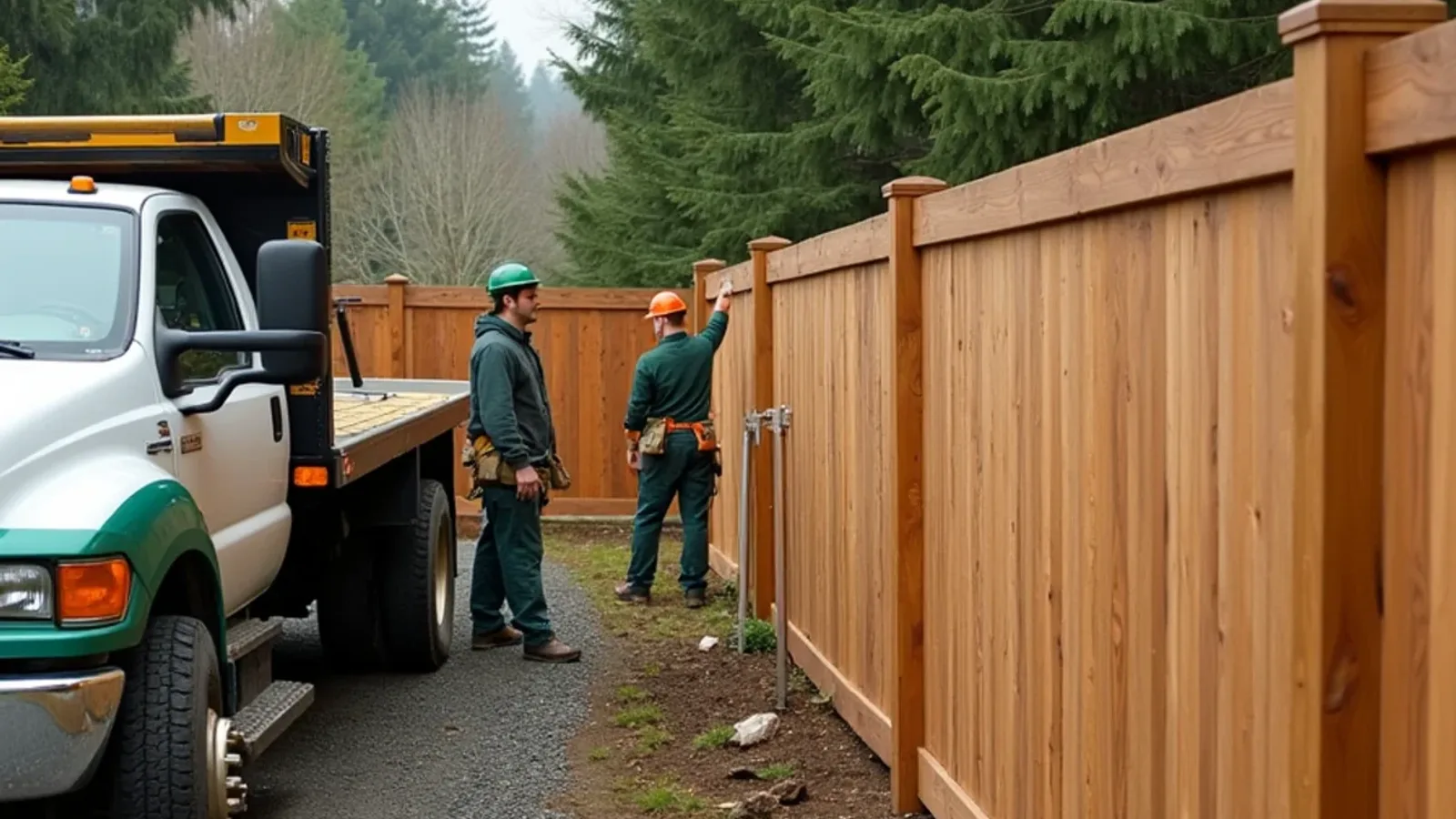
Composite fencing uses a blend of recycled wood fiber and plastic to mimic real boards while shrugging off the things that wreck wood in our climate — rot, splinters, cupping and the endless staining. Trex and similar systems give a heavy, solid privacy panel that reads like a premium wood fence.
It is the most hands-off wood-look fence you can buy, which is why owners near the lakes and in nicer subdivisions ask for it. It costs more up front than cedar, so we help you weigh the 20-year picture: higher install cost, almost no maintenance, and a color that does not need re-staining.
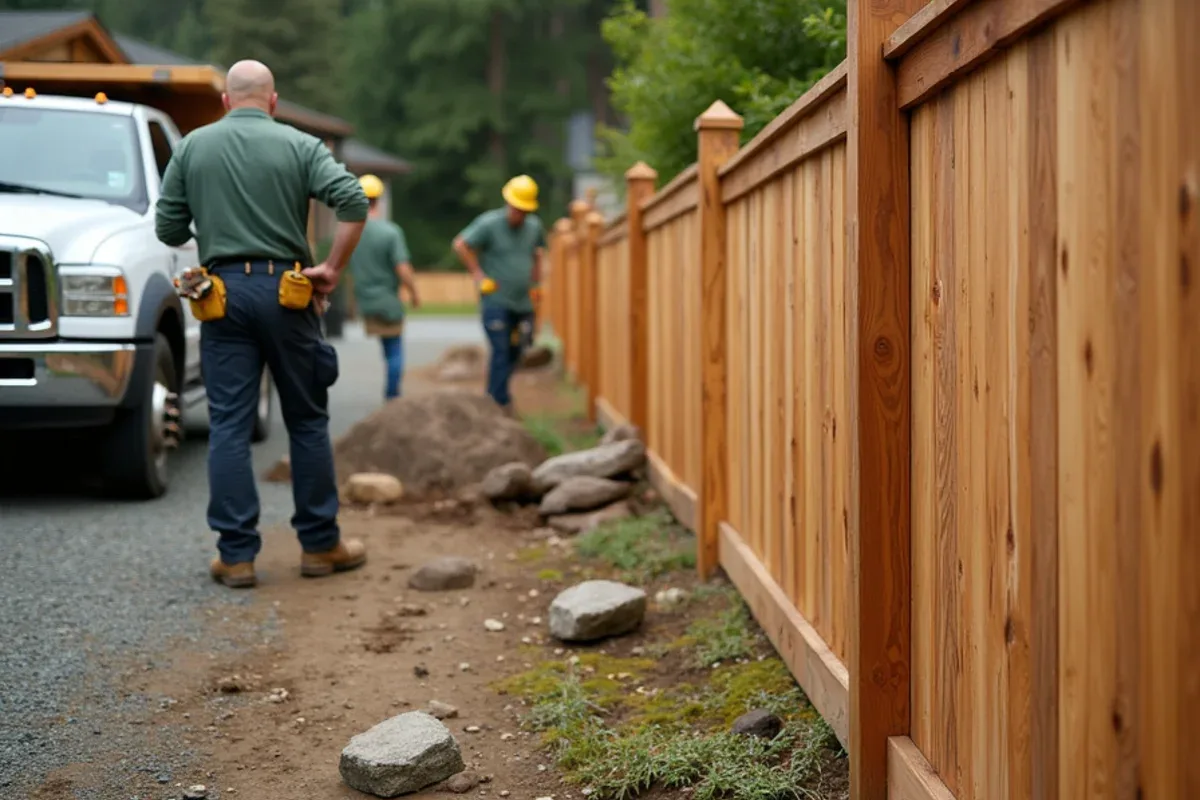
Why Composite Suits Western Washington
- No rot or soft spots even against our wet, shaded fence lines.
- No staining or sealing — the color goes all the way through.
- Heavy, solid panels that block sound and sightlines well.
- Follows gentle slopes and pairs with matching gates.
Posts, Footings and Slope
Composite panels are heavy, so the post system and footings carry real load. We set posts to spec, plan for wind on solid runs, and step panels down a grade rather than forcing a heavy panel into an unsuitable straight line.
What Composite Fencing Actually Is
Composite boards are made from recycled wood fiber bound in plastic, often with a protective outer shell. That blend is what gives them the look and heft of real lumber while shrugging off the moisture that ruins wood. Brands like Trex and Simtek build full privacy systems with heavy, textured panels that read as premium from both sides of the fence. Because the color runs through the board, scratches and sun do not expose a different shade underneath.
Composite vs Cedar vs Vinyl
Against cedar, composite trades a higher install price for near-zero upkeep and no rot. Against vinyl, composite usually looks and feels more like real wood and blocks sound better, while vinyl is lighter and a bit cheaper. For a shaded, wet fence line that you never want to think about again, composite is often the most satisfying choice; for a tight budget or a quick rental turnaround, cedar or vinyl may fit better. We lay the three side by side for your yard so the decision is yours, not a default.
Install Details and Slopes
Heavy panels put real load on the post system, so footings and post spacing are sized to the product rather than treated like a light wood fence. On a graded yard we step composite panels down the slope so the fence follows the land cleanly, and we plan for wind on long solid runs the same way we do with any privacy fence.
Composite Cost and the Long View
Composite carries the highest up-front price of the common fence materials, and the value case is a long one: no staining, no rot, no board replacement, and a color that holds. If you are staying in the home for many years, those savings add up; if you expect to move soon, the premium may not pay back before you sell. We give you an honest read on which side of that line your project falls.
Matching Gates and Finishing Details
A composite fence is only as good as its gate and its edges. We build matching composite gates on reinforced frames and heavy hardware so they carry the weight of the panels without sagging, and we detail the post caps and top rail so the finished fence looks built, not assembled. Done right, a composite fence should look like a premium wood fence that someone forgot to ever stain.
How We Install a Composite Fence
Composite panels are heavy and the system is engineered, so the posts and spacing have to be right the first time — there is no shimming a composite fence into line later.
- Confirm the line and grade, then call Washington 811 before digging.
- Set posts in concrete to the manufacturer’s spacing and depth, sized for the heavy panels and wind.
- Square and level the posts precisely, since the rigid panels show any post out of line.
- Install the rails and panels, stepping them down a slope so the fence follows the grade cleanly.
- Hang the matching composite gate on a reinforced frame and heavy hardware.
- Cap the posts, check the run and clear the site.
A Greener Fence Than It Looks
Composite has a quiet upside: most of it is made from recycled wood fiber and reclaimed plastic, so a composite fence keeps a lot of material out of the landfill. And because it never needs staining or sealing, there is no yearly round of solvents and finishes over the life of the fence. For homeowners who like that a long-lasting product is also a lower-waste one, it is a real point in composite’s favor on top of the no-maintenance appeal.
Composite Brands and What’s Under the Shell
Not all composite is the same. The better systems — names like Trex and Simtek — wrap the wood-and-plastic core in a protective shell or use a solid, concrete-and-polymer panel, which is what gives them their long warranties and their resistance to fading, scratching and moisture. Cheaper boards skip the shell and chalk or cup sooner. We install systems built for a fence rather than repurposed deck board, match the profile and color you want, and register the warranty so it actually protects you. When you are paying a premium for low maintenance, the product under the finish is the part that earns it.
Why Creative Effects for Composite
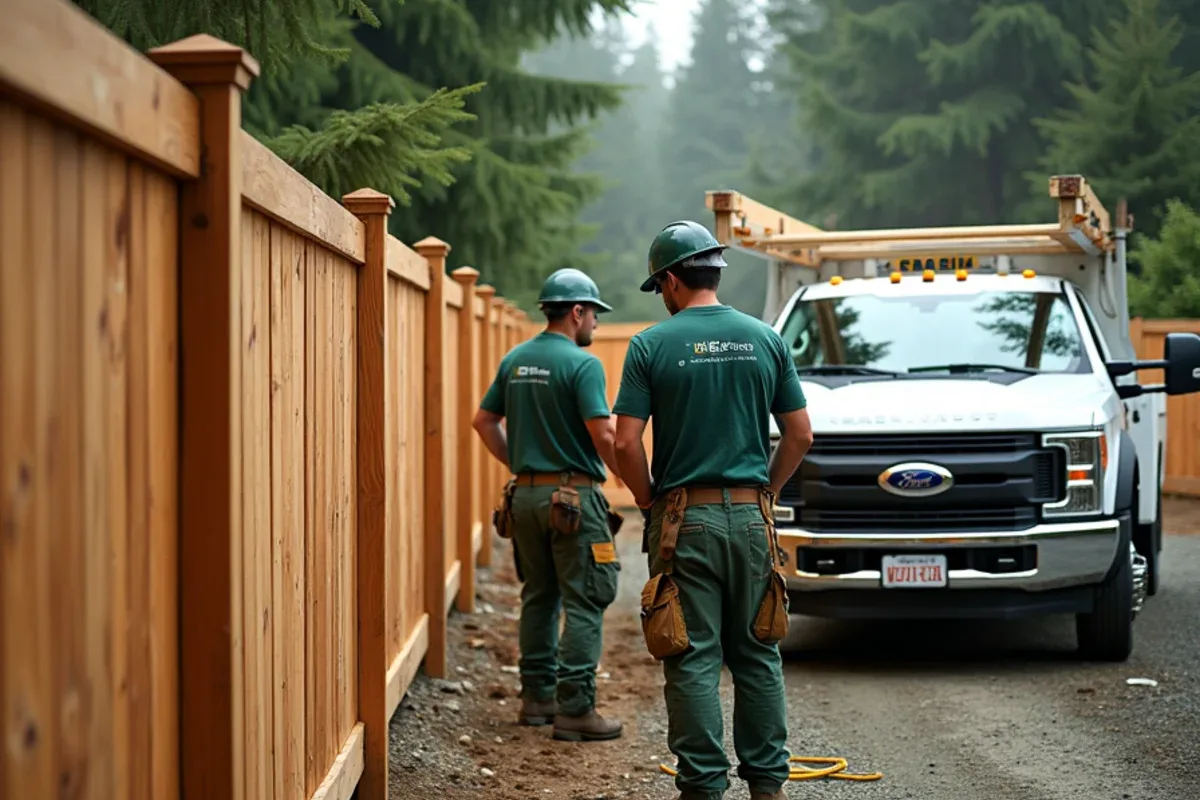
Composite is the most expensive fence you can put up, so it is the one you least want installed wrong. We build to the manufacturer’s spec — proper post spacing, sized footings, planned slope — so the warranty holds and the fence looks right for decades. Creative Effects has worked across Lakewood since 2017 as a registered Washington contractor (L&I #CREATEL809CL), insured and bonded, rated 4.6★ on Google. We will give you an honest read on whether composite pencils out for your plans or whether cedar or vinyl fits better.
Get a Free On-Site Fence Estimate
Talk to a local Lakewood fence pro. We'll look at your line, your soil and your gates—then quote it in writing.
- Insured & Bonded
- WA L&I #CREATEL809CL
- 4.6★ on Google (51 reviews)
- Free Estimates
- Serving Lakewood since 2017
Composite & Trex Fence FAQs
- Composite costs more to install but needs almost no maintenance and will not rot, while cedar costs less up front but wants periodic staining and eventually repairs. Over a long horizon, composite often closes the gap, especially on a wet, shaded line.