
Tree Fell on Your Fence? Who Pays and What to Do First
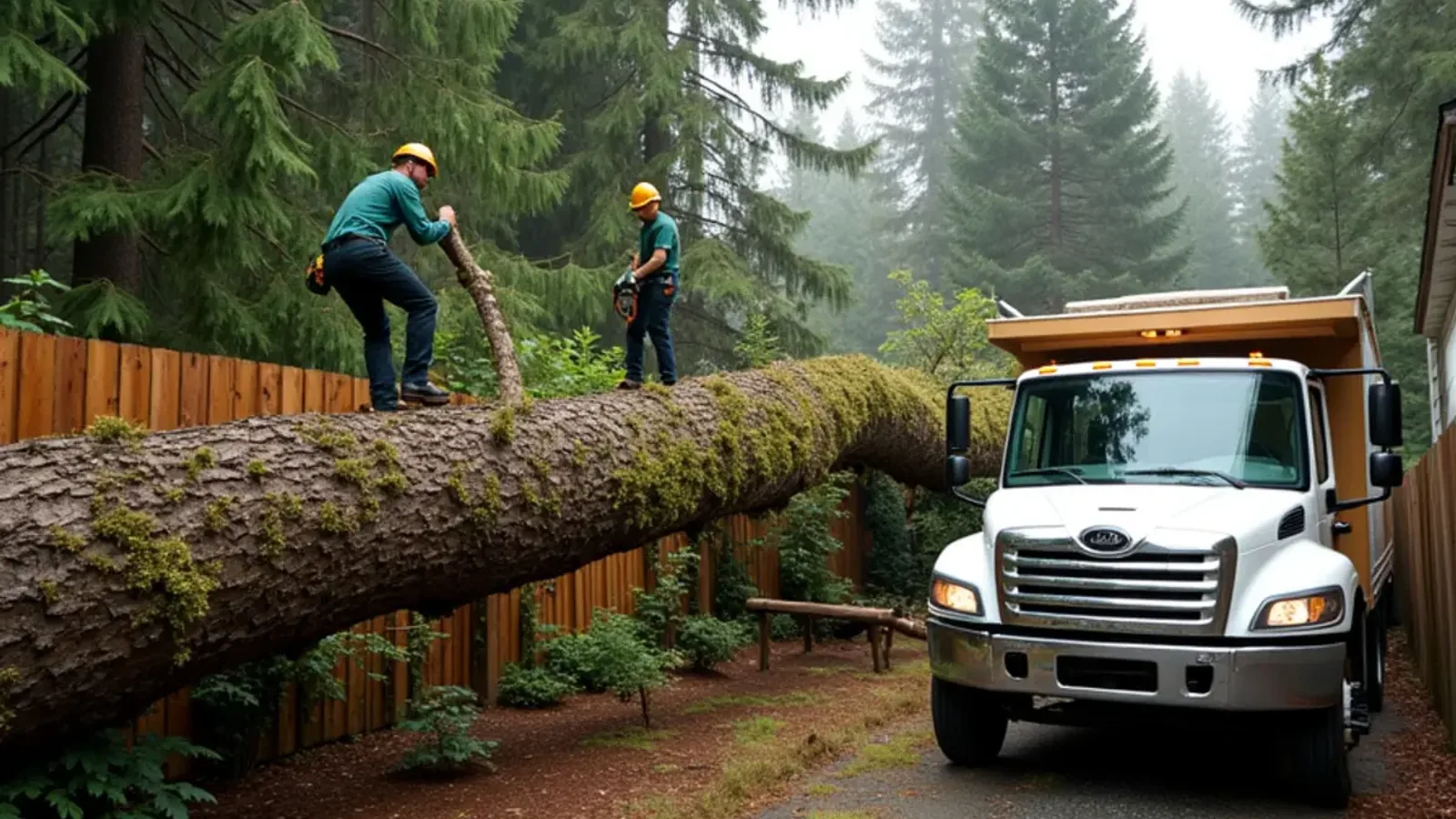
In Washington, when a healthy tree is blown down by a storm, each property owner's own insurance typically handles the damage on their side of the line, regardless of whose yard the tree grew in. That general rule shifts only if the tree was known to be dead or hazardous and nothing was done about it.
That is the question almost everyone asks first, so we put the answer up top. But treat it as general information, not a ruling on your situation, and confirm the specifics with your own insurer, because policy language and the facts of each case matter.
The Washington rule most people get wrong
Neighbors often assume that if a tree from next door crushes their fence, the neighbor automatically owes for it. Usually that is not how it works. A storm is treated as an act of nature, so the damage lands with the property it fell on, and that owner's insurance is the first place the claim goes. The fact that the trunk started on the other side of the fence does not shift responsibility by itself.
The exception turns on negligence. If the tree was visibly dead, hollow, leaning badly, or had already been flagged as hazardous, and the owner was warned and did nothing, responsibility can shift to that owner. This is exactly why written records matter. If you have ever raised a concern about a neighbor's failing tree, keep that note, text, or letter.
Make the scene safe first
A tree resting on a fence is still loaded with energy. The trunk can roll, branches under tension can whip when cut, and the root ball may lift the ground near the base. Keep everyone back and look up before you look down, because hung-up limbs drop without warning.
- Check for power or utility lines tangled in the canopy and call 911 and the utility if any are down.
- Stay out from under suspended limbs and away from a lifted root ball.
- Do not start cutting a trunk that is under load unless you know how it will move.
- Keep children and pets indoors until the area is cleared.
Keep the yard contained
Even pinned under a trunk, a fence usually has a gap somewhere that a dog can exploit. Before you focus on the tree, close off the yard with temporary fencing, pen panels, or a leash routine so you are not managing an escape on top of everything else. Neighborhoods in Puyallup and south Tacoma back onto busy roads, and a loose pet in storm chaos is a bad combination.
Document before anything moves
Photos carry your claim. Capture the tree where it lies, the crushed fence, and the base of the tree, because the condition of the trunk and roots is central to any negligence question. If a tree service has to cut the trunk before you have shot it, at least photograph the standing portion and the stump.
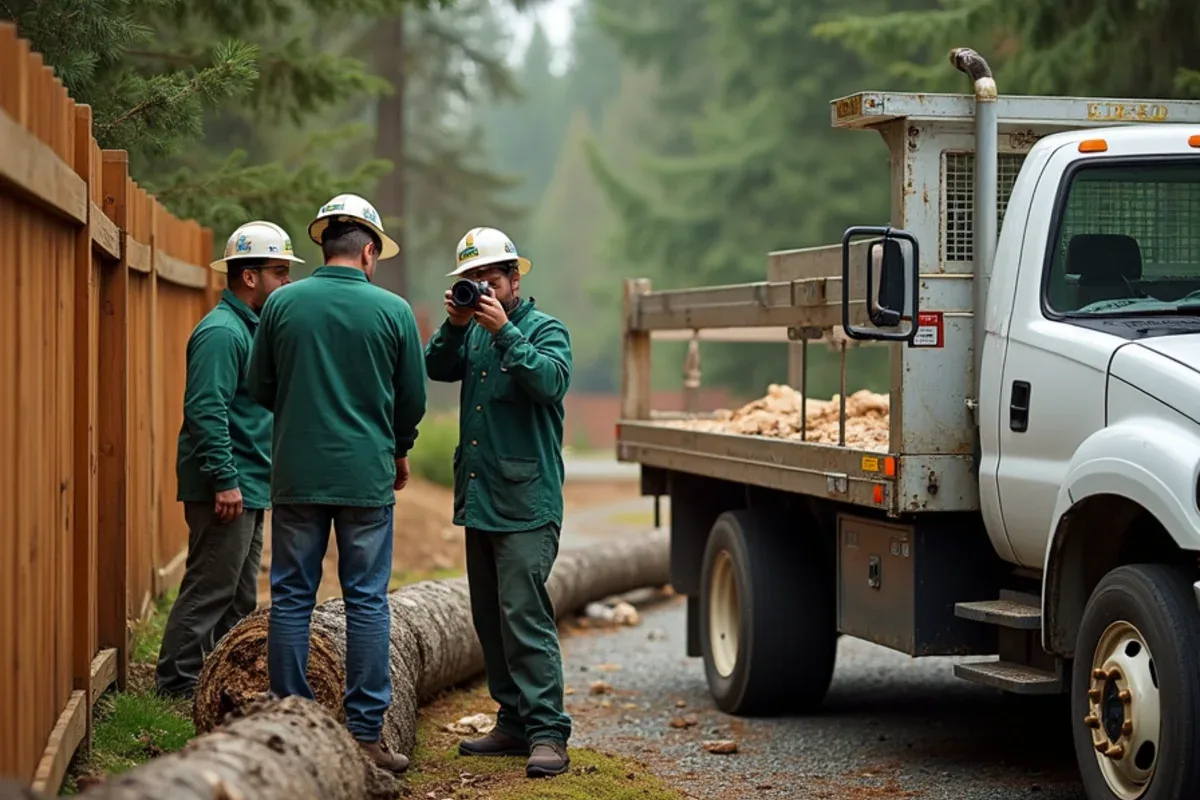
- Photograph the whole scene from several angles before cutting begins.
- Get close-ups of the trunk base, the roots, and any signs of rot or prior decay.
- Document the full extent of fence damage, including posts and gates.
- Save any prior warnings you gave a neighbor about a leaning or dead tree.
- Keep receipts for emergency tree removal and temporary fencing.
Tree removal and fence rebuild in one plan
Once the trunk is cut and hauled, the real fence damage becomes visible. A heavy conifer does not just break boards. It drives posts sideways, cracks footings, and shears rails off their brackets. In our gravelly outwash soil, a post that was knocked over at the footing has to be dug out, concrete and all, before a new one goes in.
Rebuilding to match what you had keeps the line consistent and keeps the claim simple. We can replace the damaged span, reset posts in properly sized footings, and rehang gates so they swing true again. If the fall exposed older rot in the neighboring posts, we will show you, because a storm often takes the weakest link and leaves the next-weakest standing for one more winter.
Was the tree healthy, or a known hazard?
The whole who-pays question in Washington often turns on one fact: the condition of the tree before it fell. A healthy tree that comes down in a genuine storm is treated as an act of nature, so each owner carries their own damage. But a tree that was visibly dead, hollow, rotting or leaning — especially one a neighbor had already been warned about in writing — is a different story, because letting a known hazard stand can be negligence. That is the exception that shifts responsibility.
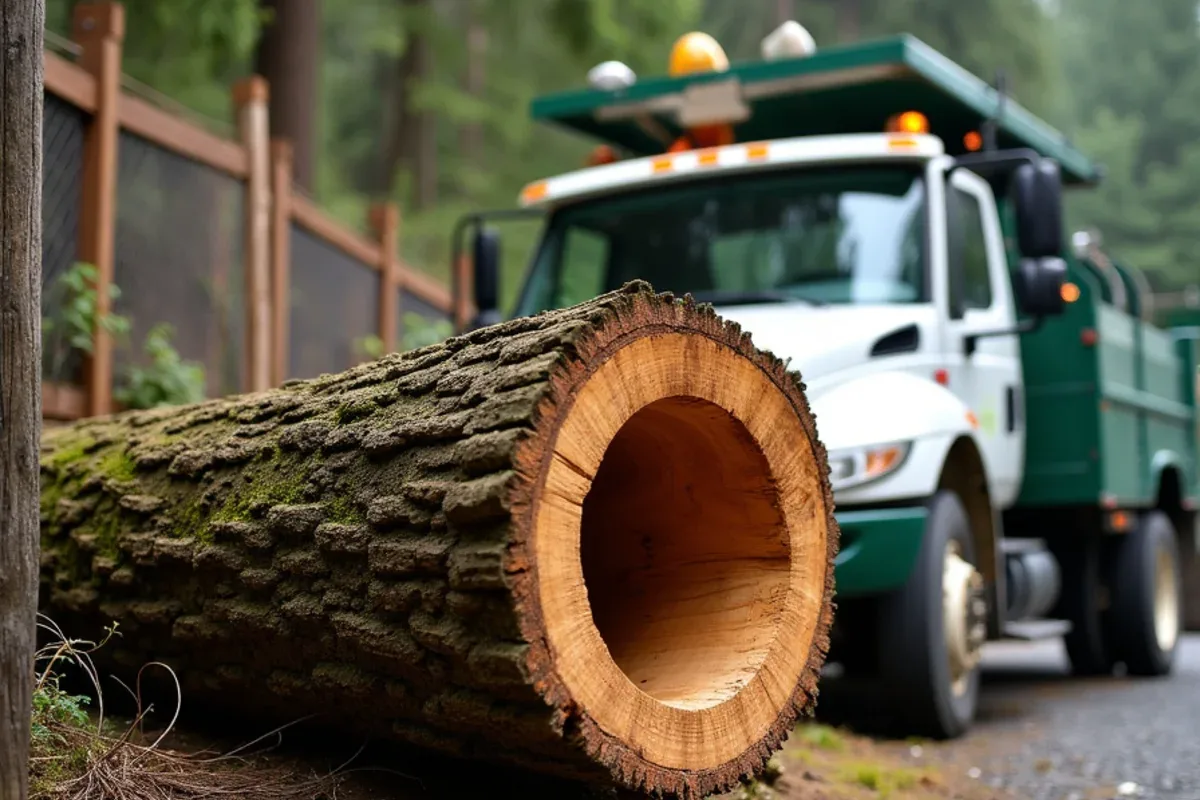
This is why the photos matter beyond the fence itself. Shoot the stump and the broken trunk: a hollow, punky or clearly rotted core is evidence that the tree was failing, while sound wood throughout supports the act-of-nature view. If you had ever sent the neighbor a note about the tree, find it. Your insurer and theirs will want to know which case this was.
What tree-and-fence cleanup really involves
A tree lying across a fence is under tension, and that is what makes it dangerous to rush. The trunk and limbs are springloaded by their own weight and by the fence pushing back, so a careless cut can snap wood or drop a limb without warning. The work has to relieve that tension in stages, lift the weight off the remaining fence instead of dragging it, and protect the sound sections as it goes. Because we came up as a full-service contractor, we can clear the tree and rebuild the crushed run as one job rather than leaving you to coordinate two crews and a yard sitting open in between.
Stopping the next tree from taking the fence
Once the dust settles, it is worth looking up. The firs and big-leaf maples that shade Pierce County yards are beautiful until one is leaning over the fence line in a November gale. Watch for dead tops, fungus at the base, cracks in the trunk, and roots lifting on one side — all signs a tree may be the next to go. A certified arborist can assess a questionable tree, and clearing a genuine hazard before it falls is far cheaper than a fence rebuild and a tree removal at once. When we rebuild a fence under mature trees, we also talk through giving the run a little extra post strength where limbs are most likely to land.
When to call a Pierce County fence contractor
Call once the tree is off and you can see what you are dealing with, or call us first and we will help coordinate the removal and the repair. Creative Effects Contracting has rebuilt storm and fallen-tree damage across the Lakewood area since 2017, we are insured and bonded, and we provide a free written estimate so the scope and cost are clear before work starts.
Reach us at (614) 543-4232 to get a crew scheduled and your yard closed back up.
Get a Free On-Site Fence Estimate
Talk to a local Lakewood fence pro. We'll look at your line, your soil and your gates—then quote it in writing.
- Insured & Bonded
- WA L&I #CREATEL809CL
- 4.6★ on Google (51 reviews)
- Free Estimates
- Serving Lakewood since 2017
Frequently asked
- Usually not, if the tree was healthy and a storm brought it down. Washington generally treats that as an act of nature, so your own insurance handles your side. Responsibility can shift only if the tree was known to be dead or hazardous and ignored. Confirm with your insurer.