
Storm Knocked Down Your Fence? What to Do First
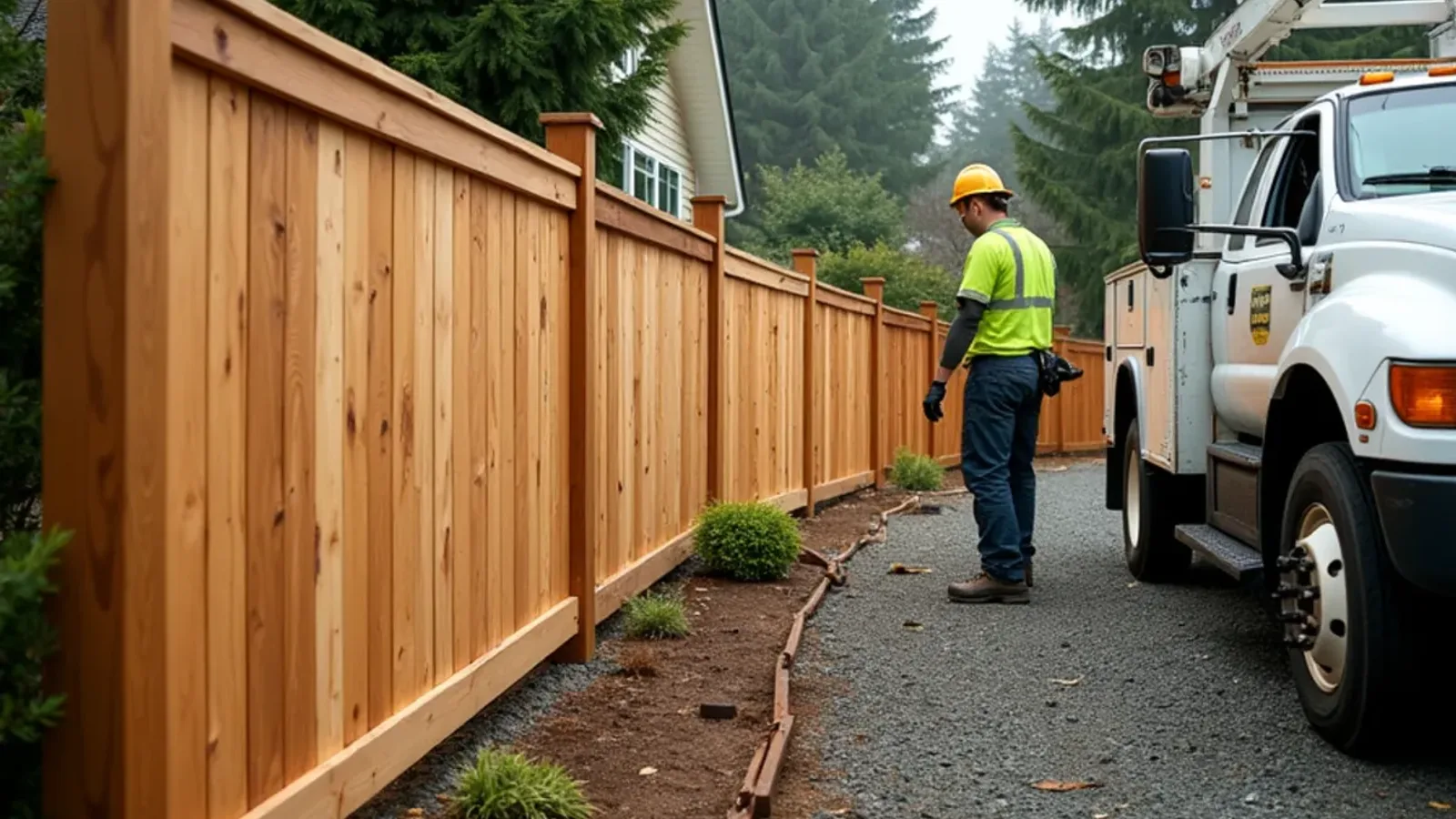
If a windstorm just put your fence on the ground, handle it in this order: keep people and pets away from downed power lines and nail-studded boards, photograph everything before you move a thing, rig a temporary barrier to contain the yard, and call a fence contractor for the repair.
Lakewood and the rest of south Puget Sound take the brunt of our wind in the dark months. The bomb cyclone that swept through in November 2024 is the kind of event that snaps posts and peels whole panels off their rails. A six-foot solid board fence behaves like a sail, so when the gusts come off the Sound it is often the fence, not the roof, that goes first.
Safety comes before cleanup
The single most important rule after any storm: treat every wire on or near the fence as live. Trees and limbs come down with power and cable lines tangled in them, and a conductor lying in wet grass can energize a chain link run for yards in either direction. If you see a line down, keep everyone back and call the utility and 911. Do not touch the fence to find out.
Even with no wires involved, a collapsed wood fence is a field of exposed fasteners. Ring-shank nails and deck screws point straight up out of flattened pickets, and treated lumber splinters are nasty. Wear boots and heavy gloves, and keep kids clear until you have swept the area.
- Assume any downed or sagging line touching the fence is live and call 911 plus the utility.
- Put on boots and leather gloves before handling any boards.
- Watch for broken glass, loose fasteners, and jagged metal post caps in the debris.
- If a tree or large limb is still hung up over the fence line, stay out from under it.
Contain the yard before you do anything else
A hole in the fence is an open gate as far as a dog is concerned, and in neighborhoods near JBLM a loose dog on a busy road is a real danger. Before you start documenting or clearing, close the gap. A roll of orange safety fence and a handful of steel T-posts or ground stakes will span an opening in a few minutes. If you do not have that on hand, a run of wire panels, exercise pen sections, or even a stretched tarp zip-tied to what is still standing will buy you time.
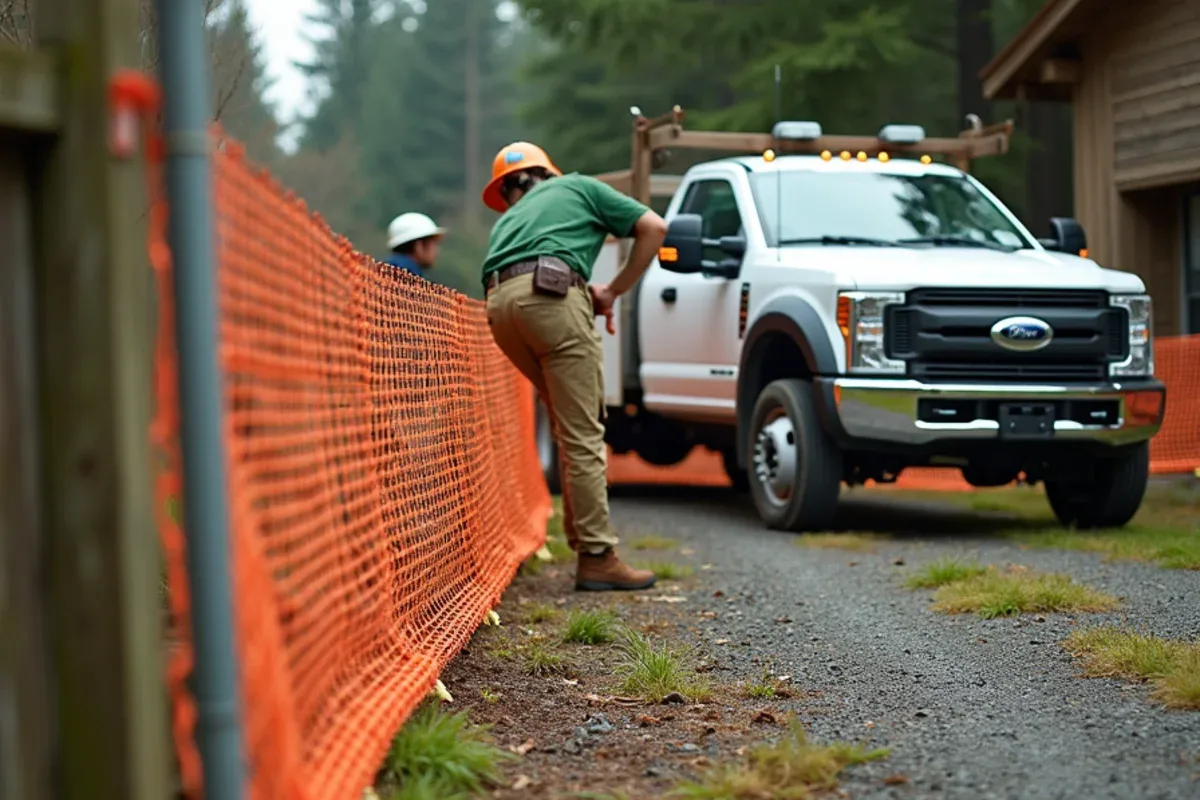
If you cannot make the yard dog-safe quickly, keep pets leashed or indoors until the repair crew arrives. It is a lot easier to manage a frustrated dog for a day than to track one down after it slips out.
Photograph the damage before you clean up
Homeowner policies often cover wind damage to fences, but the claim goes smoother when you can show the scene before anyone touches it. Shoot wide context photos and tight detail shots, and get the posts specifically, since whether a post snapped at the soil line or pulled out intact tells the adjuster a lot about the force involved.
- Take wide shots showing the whole downed run and its position in the yard.
- Take close-ups of broken posts, split rails, and any damaged gates or hardware.
- Photograph anything the fence took down with it, such as plants or an outbuilding corner.
- Note the date and, if you can, the reported wind speed for your area.
- Only after photographing should you move debris off walkways and away from the house.
Salvage or replace? How to judge each piece
After a blowdown, three outcomes are common. Panels that lifted off intact can often be reset. Posts that snapped at grade almost always need full replacement, because in our gravelly glacial soil the broken stub is set in concrete and has to come out before a new post goes in. And boards that cracked across the grain or split at the fasteners are usually firewood.
- Likely salvageable
- Whole panels that detached cleanly, undamaged gates, and hardware that only needs to be refastened.
- Replace the component
- Posts snapped at or below the soil line, rails that split end to end, and rotted sections the wind simply found first.
- Reassess the whole run
- If more than a third of the posts failed, piecemeal repair may cost more over two winters than rebuilding that run correctly once.
That last point matters here. Wind rarely picks on a healthy fence at random. When a long stretch goes down, it is often because the posts were already weakened by years of soil-line rot, and the storm just finished the job. A contractor who walks the whole line, not just the gap, can tell you which posts are sound and which are next.
Why our storms hit fences so hard
It helps to understand the physics, because it shapes how you rebuild. Wind load on a fence rises sharply with height and with how solid the panel is. A four-foot picket lets most of the air through; a six-foot solid board fence stops nearly all of it, and every square foot of that surface transfers force into the posts and footings. On an exposed corner lot, or an open prairie stretch around Spanaway, there is nothing upwind to break the gust, so those are the runs that fold first.
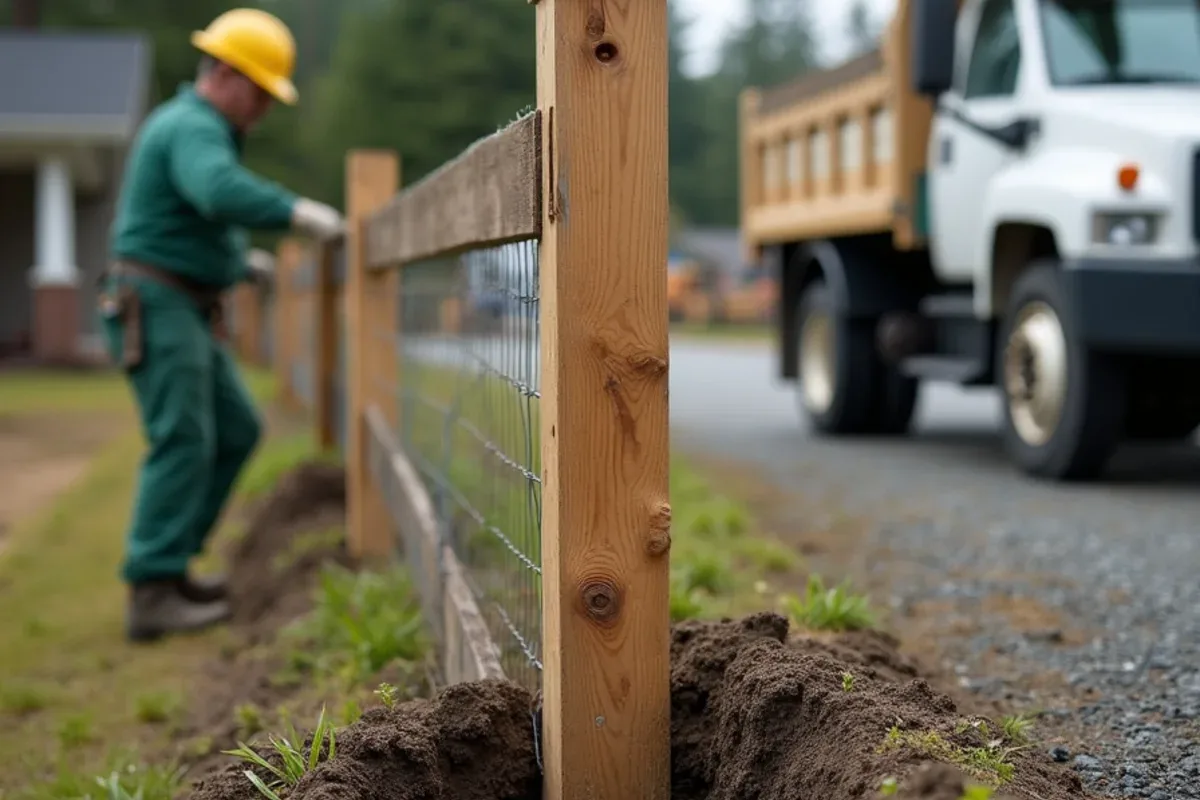
That is also why simply standing the same fence back up is a mistake. If the design and the posts were what failed, the next bomb cyclone finds them again. Deeper footings, stronger or steel posts where wood rotted, and a shadow box pattern that lets some air through on the most exposed runs all cut the load the next storm can apply.
Temporary fencing that actually holds
The goal of a temporary closure is simple: keep the yard contained until the real repair, without creating a new hazard. Orange safety fence on steel T-posts is the fastest option and spans a long gap for a few dollars a foot. For a dog that tests everything, rented chain link panels on feet are sturdier and will not blow into the neighbor's yard the way a loose tarp does. Whatever you use, anchor the bottom so a determined dog cannot push under it.
- Orange safety fence and T-posts for a quick, low-cost span across a long opening.
- Rented free-standing chain link panels for larger or stronger dogs.
- Exercise-pen sections or wire panels zip-tied to the sound fence on either side.
- Weigh or stake the base so wind does not just take the temporary barrier too.
When to call a Lakewood fence contractor
Call for help the same day if a gate is unusable, if your yard cannot be secured, or if posts have failed and you are not set up to dig and reset them in concrete. A crew that handles storm-damaged fences can get a safe temporary closure in place, pull broken footings, and rebuild to match what you had. We have served Lakewood since 2017 and we are insured and bonded, which also means our paperwork lines up cleanly with an insurance claim.
Reach Creative Effects Contracting at (614) 543-4232 for emergency fence repair, and ask for a free written estimate so you know the scope and price before any work starts.
Get a Free On-Site Fence Estimate
Talk to a local Lakewood fence pro. We'll look at your line, your soil and your gates—then quote it in writing.
- Insured & Bonded
- WA L&I #CREATEL809CL
- 4.6★ on Google (51 reviews)
- Free Estimates
- Serving Lakewood since 2017
Frequently asked
- Many policies do cover wind damage to fences, often under the other-structures coverage, though deductibles and limits vary. Photograph the damage before cleanup and confirm your specific coverage with your insurer before authorizing a full replacement.