
Cedar vs Pressure-Treated Fence Boards and Posts
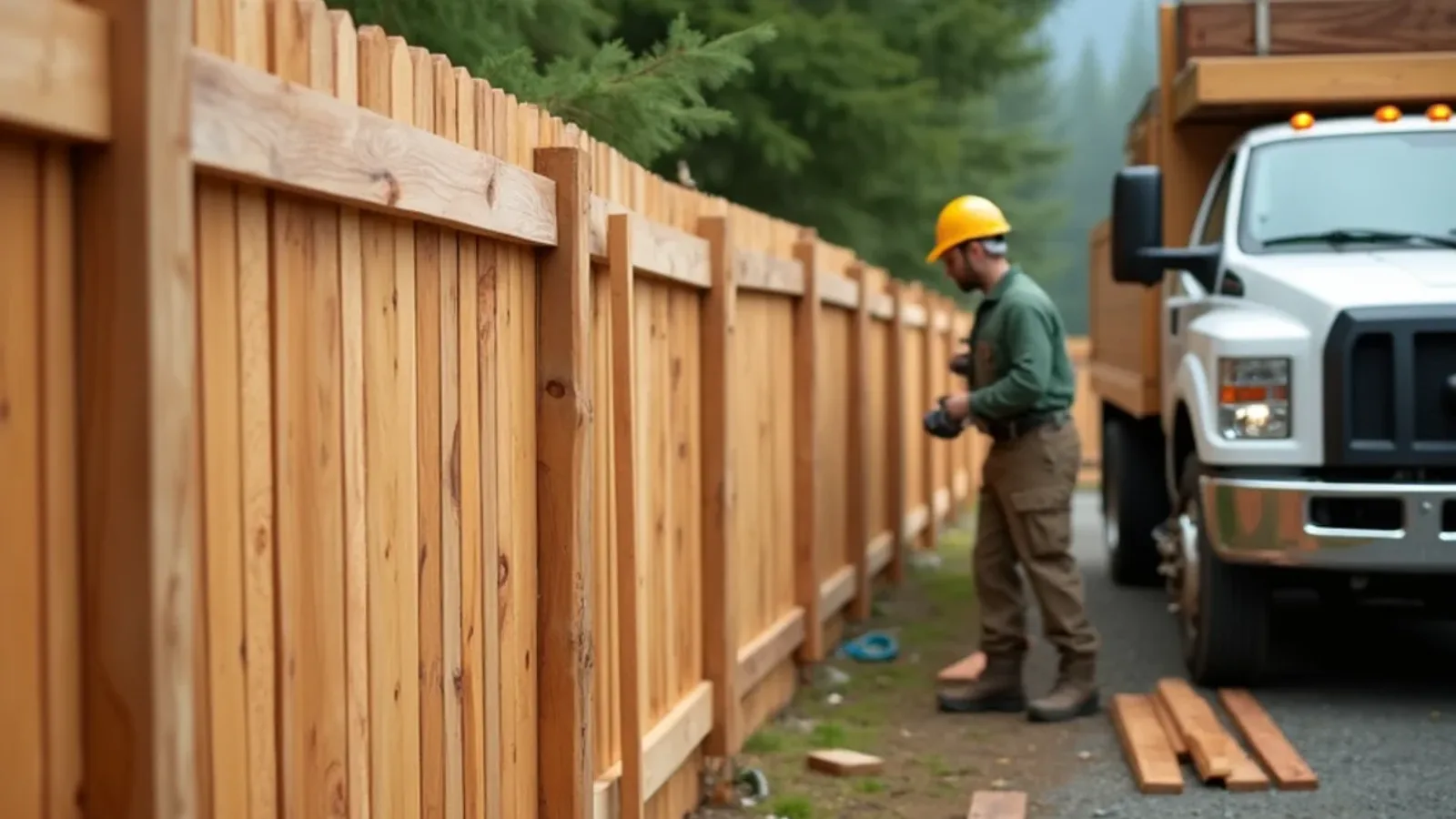
For fence boards in Western Washington, cedar usually wins on looks and natural rot resistance, while pressure-treated pine wins on price and on ground contact. The common conclusion: cedar for the boards you see, and treated or steel for the posts that live in wet soil.
Homeowners ask us to settle this all the time, and the honest answer is that it depends on which part of the fence you mean. Boards and posts live very different lives. A board faces weather on all sides but never sits in the dirt, while a post spends its whole life with its base buried in saturated ground. So let us take them separately.
The quick comparison
Cedar versus pressure-treated pine for fence lumber in Western Washington.
| Factor | Cedar | Pressure-treated pine |
|---|---|---|
| Cost per foot | $25 to $50 installed | $20 to $34 installed |
| Rot resistance | Naturally resistant, best above grade | Chemically treated, holds up in ground contact |
| Look | Warm tone, greys to silver | Greenish when new, less refined grain |
| Typical lifespan | Long when kept off the soil line | Long for posts; boards can warp and check |
| Maintenance | Can be left to grey or sealed | May warp or twist as it dries if not fastened well |
Why cedar wins for boards
Cedar is the board most people want facing the yard. It contains natural oils that resist rot and insects, it stays relatively stable instead of twisting as it dries, and it ages to a soft silver-grey that looks right in a Northwest landscape. You can seal it to hold its warm color or let it weather, and either way it does not fight you the way green treated boards sometimes do when they dry and warp after installation.
The trade-off is cost and ground contact. Cedar is more expensive per foot, and while it resists rot well above grade, it is not the best choice for the part of a post buried in constantly wet soil. That is the job treated lumber or steel does better.
Why treated pine wins for posts and budget
Pressure-treated pine is forced full of preservative specifically so it can survive ground contact, which is exactly the condition that destroys untreated wood. It costs less than cedar, so for a long run of utilitarian fence, or for the posts under any wood fence, it earns its place. The downsides are cosmetic and dimensional: it starts out greenish, and because it is often sold wet it can warp or check as it dries, so good fastening and spacing matter.
The option many local fences now use
Here is where the real-world answer has shifted. A lot of Lakewood-area fences are now built with galvanized steel posts carrying cedar boards and rails. It takes the best of both worlds: the post that lives in wet ground is steel and simply will not rot, while every visible surface is cedar.
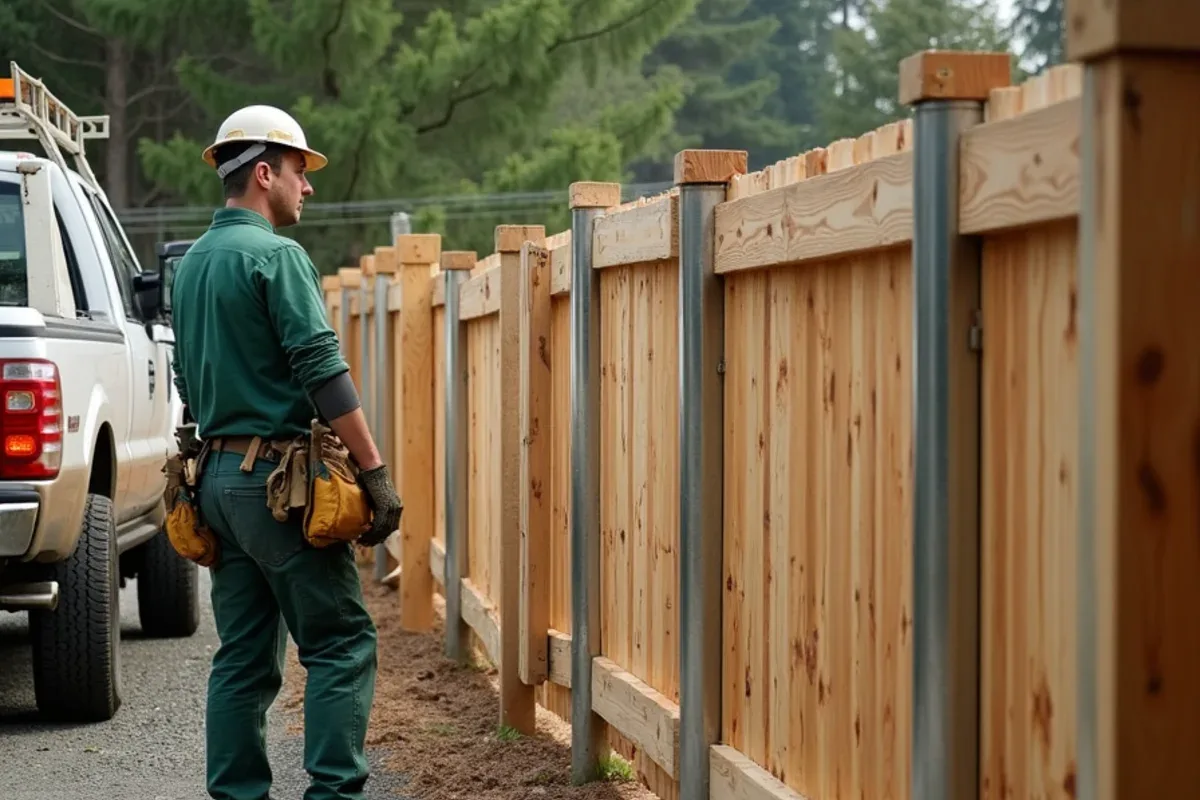
- Steel posts eliminate soil-line rot, the number-one way wood fences fail here.
- Cedar boards keep the look and feel homeowners want.
- Posts stay plumb through wind and the heave that wet soil can cause.
- The whole fence tends to stay square longer, so gates keep latching.
This matters because of our weather and ground. With around 43.9 inches of rain a year falling mostly between October and April, the soil stays wet for months, and wood posts rot from the base up. Take the post out of the rot equation with steel and you have solved the failure that sends most repair calls our way.
How to choose for your yard
- Decide how the fence should look, since that drives the board choice.
- Decide how long you want it to last with minimal repair, which drives the post choice.
- For most privacy fences here, pair cedar boards with steel or treated posts.
- For a budget utility run, treated pine throughout can make sense.
- Ask your contractor to price two versions so you can see the real difference.
Lifespan you can actually expect here
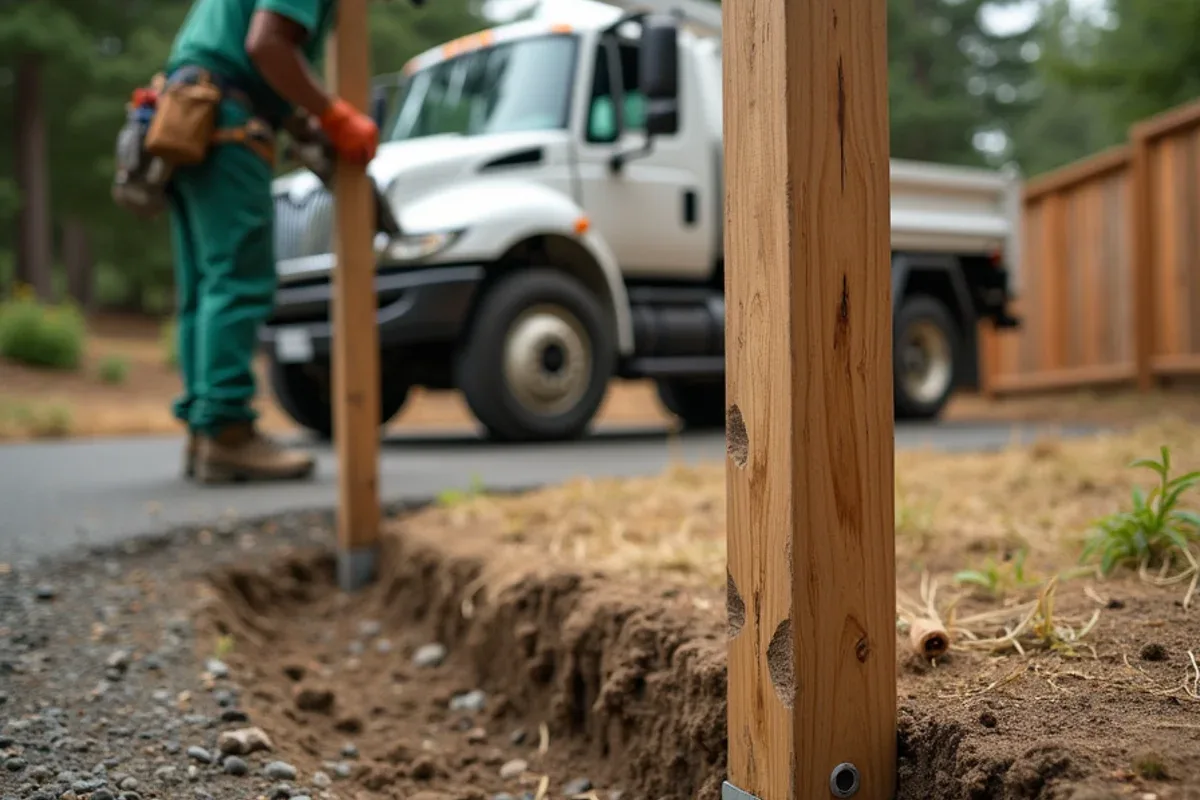
Exact numbers depend on drainage, sun and upkeep, but the pattern in Western Washington is consistent. Cedar boards, kept sealed and off the wet ground, commonly give many good years before they weather out. Pressure-treated pine boards last too but tend to cup, twist and check more as they dry. The real variable is almost never the boards — it is the posts. A wood post of either type will eventually rot at the soil line in our climate, which is the failure that leans a whole run.
Cost over twenty years, not just day one
Cedar costs a little more per board than treated pine up front, which tempts some buyers toward the cheaper lumber. But the twenty-year math usually favors doing it right: a cedar fence on steel or treated posts that you seal on schedule can outlast two cheap builds that rotted at the base. When you factor in the labor to tear out and rebuild a failed fence — not just the materials — the fence that was built to not fail is almost always the cheaper one in the end.
Where composite and vinyl fit in
Cedar and treated pine are not the only choices, and it is worth knowing where the alternatives land. Vinyl costs more up front than either wood but never needs staining, so its long-run cost can come out lower. Composite gives the richest wood look with the least upkeep at the highest price. If the appeal of wood is the warmth and you are willing to seal it on schedule, cedar is hard to beat. If the appeal is never thinking about the fence again, vinyl or composite is the honest answer, and we are glad to price both against a cedar build so the trade-off is clear. For a rental or a quick resale prep, treated pine or chain link can still be the right budget call, and we will say so rather than upsell a fence the situation does not need. The best material is the one that matches how long you will own the home, how the yard is used, and how much upkeep you actually want to do.
When to call a Lakewood fence contractor
Call when you want to see the cedar, treated, and hybrid options priced for your actual yard. Creative Effects Contracting has built and repaired wood fences across the Lakewood area since 2017, we are insured and bonded, and our free written estimate can lay out more than one material combination so you choose with real numbers in front of you.
Reach us at (614) 543-4232 to talk through the right mix for your property.
Get a Free On-Site Fence Estimate
Talk to a local Lakewood fence pro. We'll look at your line, your soil and your gates—then quote it in writing.
- Insured & Bonded
- WA L&I #CREATEL809CL
- 4.6★ on Google (51 reviews)
- Free Estimates
- Serving Lakewood since 2017
Frequently asked
- Yes, and it is one of the most practical builds here. Treated or steel posts resist the ground-line rot that kills wood fences, while cedar boards above give the warm look. You get cedar's appearance with a post that outlasts it.